
Automotive Injection Molding: How Precision Parts Power the Cars of Tomorrow
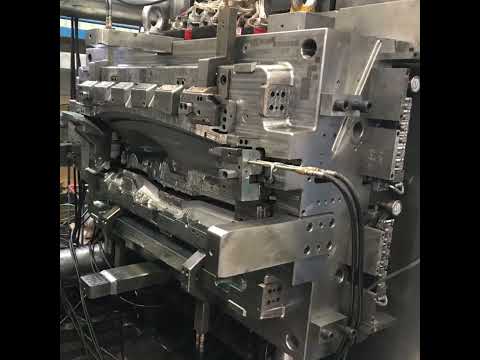
The dashboard of a new SUV is formed in a single 90-second cycle of a 3,000-ton injection molding machine, delivering precision and strength that stamped metal parts cannot match. Molten thermoplastic is forced into a steel mold at extreme pressure, cooling into complex geometries like air-intake manifolds or lightweight fenders with integrated mounting points. This process eliminates secondary assembly by producing fully formed components—such as a bumper with pre-molded sensor pockets—in one shot, reducing weight by up to 40% compared to traditional materials. Using injection molding, engineers merge multiple parts into a single, rigid structure that withstands thermal cycling and crash loads while shaving grams from every trim level.
Contenuti dell'articolo
Precision Molding Solutions in Modern Vehicle Production
Precision molding solutions enable the high-volume production of complex, tight-tolerance components like engine bay sensors, fuel system housings, and interior trim bezels. By employing multi-cavity molds with hot runner systems and automated process control, manufacturers achieve consistent part weight and dimensional accuracy across millions of cycles. How do precision molds reduce post-production costs? By integrating intricate features such as snap-fits or sealing lips directly into the tool design, they eliminate secondary assembly and machining operations. For high-performance under-hood applications, precision molds utilize specialized steel grades with conformal cooling channels to manage thermal stress and minimize warpage in glass-filled nylon or PEEK parts, ensuring reliable fit and function in modern vehicle assemblies.
Lightweight Polymers Driving Fuel Efficiency Gains
By replacing heavier metal components, high-performance lightweight polymers directly reduce vehicle mass, which is the primary driver of improved fuel economy. Precision injection molding enables the production of complex, thin-walled polymer parts—such as engine intake manifolds and structural brackets—that maintain critical strength while shedding significant weight. This mass reduction translates to lower rolling resistance and reduced energy required for acceleration, allowing internal combustion and hybrid powertrains to achieve more miles per gallon or kilowatt. Every gram saved through molded polymer substitution contributes measurably to operational efficiency.
Lightweight polymers, formed via precision injection molding, cut vehicle mass to enhance fuel efficiency without sacrificing structural integrity.
High-Strength Composites for Structural Components
In precision molding, high-strength composites for structural components rely on discontinuous fiber-reinforced thermoplastics to achieve load-bearing performance. The process uses injection-compression molding to align long glass or carbon fibers within the melt, reducing void content. Key steps are:
- Controlled fiber-melt blending at optimized shear rates to prevent breakage.
- Injection into preheated molds to maintain fiber orientation during flow.
- Compression consolidation to eliminate knit lines and achieve uniform density.
Parts like front-end carriers and seat cross-members meet tensile moduli above 20 GPa while cutting weight by 40% versus steel, requiring tool steels with 60+ HRC hardness for erosion resistance from abrasive fiber fillers.
Key Applications Across Vehicle Systems
Injection molding delivers critical components across key vehicle systems, optimizing performance and assembly. Powertrain applications use high-temperature thermoplastics for intake manifolds and engine covers, reducing weight versus metal. Lighting systems rely on optically clear molded housings and lenses for headlamps and taillights, ensuring precision light distribution. Interior systems benefit from complex, multi-material molds for instrument panels and door trims, integrating soft-touch surfaces and structural ribbing without secondary operations. Exterior applications include painted bumper fascias and grille shutters, requiring durable, Class-A surface finishes. Underhood, injection-molded connectors and sensor housings withstand thermal cycling and fluid exposure.
Tooling design for these systems must account for disparate shrink rates and thermal expansion across material zones to prevent warpage and maintain fit.
This system-specific molding approach directly reduces parts consolidation and assembly complexity.
Interior Trim and Dashboard Fabrication
Interior trim and dashboard fabrication rely on injection molding to produce complex, multi-material assemblies with precise fit and finish. Large-tonnage presses mold entire instrument panels as single structural parts, integrating ducting and component mounts. Overmolding wraps rigid substrates with soft-touch TPO or PC/ABS skins, eliminating secondary wrapping steps. Class-A surface quality demands mirror-polished tooling and controlled gas-assist filling to prevent sink marks. Trim pieces like door panels and center stacks use sequential valve gating for multi-cavity balance. A comparison of typical applications clarifies material selection:
| Component | Material | Key Injection Aspect |
|---|---|---|
| Dashboard substrate | PP-LGF, PC/ABS | Structural ribs with core-back foaming |
| Soft-touch trim | TPE, TPO | Overmolding onto rigid carrier |
| Decorative bezels | PMMA, ABS | High-polish cavity for gloss match |
Under-the-Hood Parts: Durability Under Heat
Under-the-hood components demand exceptional thermal resilience, as they endure prolonged exposure to engine temperatures exceeding 150°C. High-performance engineering thermoplastics, such as polyphthalamide (PPA) and polyphenylene sulfide (PPS), are injection-molded into intake manifolds, thermostat housings, and oil pans, offering sustained mechanical integrity under cyclic heat loading. These materials resist creep and degradation from hot oil or coolant, while specialized fillers like glass fibers minimize thermal expansion mismatches with metal assemblies. Precision mold design ensures uniform wall thickness to prevent warping and stress concentration, directly impacting part longevity. The resulting heat-stable polymer components reduce weight compared to metal alternatives without sacrificing dimensional stability in extreme operating environments.
Exterior Body Panels and Lighting Housings
Injection molding for automotive exterior panels and lighting focuses on creating large, durable parts that withstand weather and road debris. Body panels like fenders and doors benefit from lightweight, high-strength thermoplastics, resisting dents while simplifying assembly. Lighting housings use clear, UV-resistant polymers to protect LEDs and lenses, ensuring beam accuracy and longevity without yellowing. Precision molds deliver complex curves and seamless fitment, critical for both aerodynamics and sleek vehicle styling.
- Body panels often integrate mounting points and edge contours directly into the mold, reducing secondary operations.
- Lighting housings incorporate heat sinks and optical pockets for LED modules during the molding process.
- Impact-modified materials prevent cracking in cold climates for both panels and housings.
Powertrain and Transmission Components
In the powertrain and transmission, injection molding creates high-strength parts like engine intake manifolds and sensor housings that can handle heat and vibration. You’ll find molded nylon or PPA used for oil pans and valve covers, replacing heavier metal. Transmission components, including shifter forks and stator rings, rely on the process for precise, complex geometries without post-machining. Molded gears and bearing cages in oil pump assemblies also reduce weight and friction, directly boosting fuel efficiency and durability under constant load.
Advanced Materials Shaping Automotive Design
In modern automotive design, advanced materials like long-fiber-reinforced thermoplastics are reshaping injection molding. By replacing stamped metal in front-end carrier structures, these materials allow molders to integrate brackets, sensor mounts, and cooling ducts into a single lightweight part. This shift reduces tooling complexity and assembly steps while improving crash energy absorption. Similarly, hybrid overmolding of carbon-fiber-reinforced nylon onto aluminum inserts creates stiff yet thin A-pillars that meet rollover safety standards without adding bulk. Glass-filled polypropylene now fills interior trim, offering scratch resistance and matte finishes previously requiring secondary coatings. Mold flow simulation becomes critical here—it predicts fiber orientation to avoid warpage in large, thin-wall body panels. For molders, this means rethinking gate placement and cooling channel designs to handle highly filled, abrasive resins without premature tool wear.
Thermoplastic Olefins for Bumper Systems
Thermoplastic olefins (TPOs) for bumper systems combine the impact resistance of rubber with the processability of polypropylene, enabling the production of lightweight, paintable fascias. These materials flow readily in injection molding, filling complex geometries for integrated grilles and sensor housings. Their inherent flexibility allows for thin-wall design, reducing material consumption without compromising energy absorption during low-speed collisions. Painted thermoplastic olefin bumpers achieve Class A surfaces directly from the mold, minimizing secondary finishing steps.
- Offers a balance of stiffness for structural support and ductility for impact performance
- Exhibits low coefficient of thermal expansion, maintaining dimensional stability across temperature ranges
- Recyclable as a mono-material system when using all-TPO constructions
- Supports weld-line strength retention for molded-in attachment points
Glass-Filled Nylon for Engine Bay Resilience
Glass-filled nylon is a go-to for engine bay parts because it handles heat, vibration, and chemical exposure without cracking. The added glass fibers boost stiffness and dimensional stability, so components like intake manifolds and valve covers hold their shape under hood temperatures. This material also resists oil and coolant degradation, which is critical for long-term resilience in that harsh environment. For injection molding, it flows well into complex geometries while maintaining superior heat deflection under hood.
Glass-filled nylon delivers the stiffness and thermal stability needed for engine bay components to survive constant heat and chemical exposure.
Bio-Based Resins and Recycled Feedstocks
Bio-based resins derived from corn or sugarcane now replace traditional petroleum-based plastics in injection-molded interior trim and under-hood components, offering identical mechanical strength with a reduced carbon footprint. Recycled feedstocks, such as post-industrial polypropylene and reclaimed nylon from fishing nets, are routinely processed into durable dashboards and brackets without reinforcing agents. High-performance recycled pellets maintain flow characteristics essential for complex geometry tooling. Manufacturers must adjust drying cycles and mold temperatures for these feedstocks to prevent warping.
- Bio-based resins require 20–30°C lower melt temperatures than conventional ABS, saving energy per cycle.
- Recycled polyamide absorbs moisture faster, demanding shorter residence times in the barrel to avoid degradation.
- Pre-consumer scrap from bumper production is re-granted directly into new structural mount parts.
Process Innovations for High-Volume Output
For automotive high-volume output, multi-cavity and family mold designs are key, letting you produce several interior trim or connector pieces per cycle. Adopt hot runner systems with valve gates to eliminate cold runner waste and reduce cycle times on large parts like bumper covers. Automated rapid mold change systems slashed downtime for tool swaps, while in-mold sensors enable real-time cavity pressure adjustments, preventing short shots at top speed. Conformal cooling channels, printed via additive manufacturing, drastically shorten cooling phases for complex geometries, ensuring consistent part quality without slowing the line.
Multi-Cavity Tooling for Rapid Production
Multi-cavity tooling for rapid production positions high-speed automotive molding as a cornerstone of process innovation. By engineering a single mold with multiple identical cavities, manufacturers can produce several parts—such as interior clips or sensor housings—per cycle, dramatically slashing per-unit cycle time. This design demands precise flow balancing to ensure each cavity fills uniformly, preventing short shots or warpage. Advanced cooling channel layouts are critical to extract heat swiftly, maintaining tight tolerances on complex geometries. The result is a scalable solution that meets demanding automotive output quotas without sacrificing part integrity or material consistency.
Multi-cavity tooling for rapid production boosts output per cycle through balanced flow and advanced cooling, enabling automotive manufacturers to achieve high-volume targets with precision.
Insert Molding for Integrated Metal Parts
Insert molding directly encapsulates metal cores, such as threaded inserts or sensor housings, within thermoplastic during the injection cycle. This eliminates secondary assembly and reduces part count for critical automotive components. The process follows a precise sequence:
- Pre-position the pre-formed metal insert into the mold cavity, often using a robotic arm for speed.
- Clamp the mold and inject molten polymer around the insert, which mechanically locks as the plastic cools and shrinks.
- Eject the finished, integrated part with zero post-molding alignment.
This technique enables robust metal-to-plastic bonding, crucial for high-stress applications like engine mounts or electronic control units, while maintaining the high cycle times required for mass production.
Gas-Assist Techniques to Reduce Weight
Gas-assist techniques let us hollow out thick sections, slashing part weight without sacrificing strength. By injecting nitrogen gas into the melt, we create internal channels that reduce material use. This is perfect for automotive components like door handles or mirror brackets. Weight reduction in auto parts directly improves fuel efficiency and lowers material costs. Q: Does gas-assist work for structural parts? Yes, it maintains rigidity by leaving a solid skin around the hollow core, so it handles loads while being lighter.
Two-Shot Molding for Multi-Material Seals
Two-shot molding for multi-material seals eliminates secondary assembly by overmolding a rigid thermoplastic substrate with a liquid silicone rubber or TPE in a single cycle. This process directly bonds the elastomer to the plastic, creating integrated lip seals, gaskets, and dust covers that withstand high pressure and thermal cycling. Two-shot molding achieves consistent bond-line integrity across thousands of parts, reducing leak paths found in co-injected or insert-molded seals. Cycle times remain competitive because the tool rotates or indexes without part removal, enabling high-volume production of complex seal geometries for transmissions and brake systems.
Two-shot molding bonds elastomer to plastic in one cycle, producing leak-proof multi-material seals for high-volume automotive applications.
Quality Control and Tighter Tolerances
On the factory floor, a door panel’s snap-fit no longer clicks home after a 0.02 mm mold wear. That’s where tightening tolerances become non-negotiable. For automotive injection molding, quality control shifts from visual checks to real-time cavity pressure monitoring, catching deviations before parts exit the press. A common question: “How do we prevent flash on complex Class A surfaces?” The answer lies in staggered mold temperature control and weekly CMM audits on critical mating features—such as instrument panel clips—where even 0.01 mm error introduces vibration or wind noise. Each corrective action, from adjusting hold time to swapping cavity inserts, feeds back into the process control plan, ensuring every batch of headlamp housings or console bins precisely matches the 3D master data, not just print dimensions.
Real-Time Monitoring via IoT Sensors
In injection molding for automotive parts, real-time process adjustments via IoT sensors catch tiny deviations in temperature or pressure as they happen, so you avoid scrapping a whole batch of dashboards or light housings. These sensors directly monitor cavity conditions, letting operators tweak parameters on the fly to maintain tighter tolerances. Instead of waiting for a post-production check, you get instant alerts if a sensor spots an anomaly, keeping every cycle consistent.
IoT sensors give you a live feed of your molding conditions, so you can fix issues mid-run and hold those critical tolerances without guesswork.
Automated Optical Inspection for Flawless Surfaces
Automated Optical Inspection (AOI) for flawless surfaces in automotive injection molding uses high-resolution cameras and machine vision to detect micro-scratches, sink marks, and flow lines immediately post-molding. These systems apply defect recognition algorithms against a master part model, rejecting non-conforming components before they enter assembly. High-speed surface mapping captures even textured or glossy finishes, critical for visible interior trims and exterior body panels. AOI ensures 100% dimensional verification without physical contact, preventing paint absorption issues from undetected surface flaws.
Q: What is the minimum defect size AOI can reliably detect on automotive injection-molded surfaces? A: Modern AOI systems can consistently identify surface anomalies as small as 0.1 mm in depth or width, depending on lighting configuration and part geometry.
Simulation Software for Predictive Mold Flow
Simulation software for predictive mold flow enables engineers to model polymer behavior within complex automotive tooling before steel is cut. By analyzing fill pattern optimization, the software identifies weld lines, air traps, and pressure gradients that degrade dimensional stability. This allows precise gate placement and cooling channel adjustments, directly reducing warpage in components like dashboards or lighting housings. Predictive corrections for shear heating and packing phase dynamics ensure tighter tolerances without physical trials, minimizing scrap rates in high-volume production.
- Detects short shots and flow hesitation in thin-wall geometries
- Calibrates shrinkage compensation for specific automotive-grade resins
- Predicts sink mark depth from variable wall thickness designs
Sustainability and End-of-Life Considerations
In a recycling yard, the dashboard from a decade-old sedan is broken down, its molded polypropylene sorted for regrind into fresh airflow ducts for new models. This loop is the core of end-of-life planning: designing parts for single-material construction and easy disassembly.
A snap-fit assembly that avoids metal inserts saves hours of manual separation when the vehicle is scrapped.
For structural brackets, engineers specify glass-filled nylon that can be remelted into floor mats or underhood components. Even the color is chosen to mask minor streaking from recycled content, ensuring the material’s second life is as valuable as its first.
Closed-Loop Recycling of Scrap Material
Injection molding for automotive parts enables closed-loop recycling of scrap material by systematically reprocessing production waste, such as sprues, runners, and rejected components. This loop begins with immediate segregation of scrap at the press, followed by grinding into uniform regrind. The regrind is then blended with virgin resin at controlled ratios to maintain mechanical properties, often under 20% for structural parts. The reprocessed material re-enters the molding cycle for non-critical components like interior clips or brackets. This approach reduces raw material demand while ensuring consistent quality through rigorous contamination checks and property validation before reuse.
- Collect and segregate scrap immediately at the molding station.
- Grind scrap into consistent-sized regrind particles.
- Blend regrind with virgin material at a defined percentage.
- Reprocess the blend into approved automotive components.

Design for Disassembly to Improve Reuse
Design for Disassembly in injection molding facilitates the separation of automotive components at end-of-life. This involves using snap-fits, threaded inserts, or mechanical interlocks instead of adhesives or permanent welds. Specifying a single polymer type for an entire assembly or using color-coded, compatible materials simplifies sorting. Designing with directional disassembly paths allows robotic or manual dismantling of interior panels or under-hood modules without damage. Hinged or breakaway gate vestiges on molded parts reduce the need for cutting, preserving material purity for closed-loop reuse as regrind in secondary automotive applications.
Reduced Energy Consumption Through Servo-Driven Presses

Servo-driven presses directly address sustainability by drastically cutting energy consumption in automotive injection molding. Unlike traditional hydraulic systems that run continuously, servo motors draw power only during actual movement, such as clamping or injection. This on-demand operation reduces total energy usage by up to 50-80% per cycle. The precision of servo control also eliminates wasteful over-packing and reduces cooling time through optimized velocity profiles. Lower heat generation from the drive system further decreases the load on auxiliary cooling equipment. Consequently, servo-driven energy efficiency directly lowers the carbon footprint of every molded automotive component without compromising cycle time or part quality.
Cost Management and Tooling Longevity
In automotive injection molding, Cost Management and Tooling Longevity are directly tied to mold steel selection and proactive cooling system design. Using high-grade P20 or H13 steels with nitriding drastically reduces wear from abrasive glass-filled nylons, avoiding costly cavity polishing every 50,000 cycles.
Integrating conformal cooling channels, rather than straight-drilled lines, slashes cycle times by up to 30% while preventing thermal fatigue that cracks tooling.
This precision minimizes scrap rates from warpage—a common cost drain for large structural parts—and extends die life past one million shots. Smart preventive maintenance, like lubricating slides and monitoring ejection force, catches early galling on core pins, saving thousands in emergency shutdowns. Ultimately, tougher tooling with optimized cooling lowers per-part amortization, keeping production profitable without sacrificing quality.
Strategies for Minimizing Cycle Times
Strategies for minimizing cycle times in automotive injection molding focus on balancing speed with tool longevity. Optimizing cooling channel design, including conformal cooling via additive manufacturing, directly reduces heat dissipation periods. Implementing high-speed injection phases for thin-walled components like interior trim lowers fill times without inducing shear stress. Reducing wall thickness through design-for-manufacturing cuts both material and cooling duration. Efficient mold temperature control via thermal cycling systems prevents warpage while accelerating solidification.
- Incorporate conformal cooling channels near weld lines and thick sections
- Use high-speed servo-driven injection units for rapid cavity filling
- Reduce part wall thickness to 2.0–2.5 mm for structural components
- Deploy closed-loop temperature controllers to maintain optimal mold surface uniformity
Modular Mold Bases for Flexible Production
Modular mold bases enable rapid cavity swaps to produce multiple automotive variants from a single frame, directly reducing per-part tooling costs. This system allows core-and-cavity inserts to be changed without removing the base from the press, slashing changeover time. Flexible production through modular tooling extends the base’s lifecycle by distributing wear across replaceable inserts rather than the entire assembly.
- Interchangeable inserts adapt to different part geometries without rebuilding the base.
- Standardized locating and cooling circuits ensure repeatable alignment and thermal performance.
- Pre-hardened base steels withstand repeated clamping cycles in high-volume automotive runs.
Predictive Maintenance for Lower Downtime
Predictive maintenance slashes costly downtime in automotive injection molding by catching issues before they halt production. Sensors on molds and machines track variables like temperature and pressure, triggering alerts when anomalies deviate from healthy baselines. You can plastic injection molding automotive parts then schedule repairs during planned breaks, not emergency stops. To implement this, follow a clear sequence:
- Install real-time condition monitoring on critical tooling.
- Set baseline parameters for each mold cycle.
- Program alerts for minor deviations.
- Schedule interventions based on alert severity.
This keeps your tooling running longer and parts flowing without surprise breakdowns.
Emerging Trends in Electric and Autonomous Vehicles
The shift toward electric and autonomous vehicles demands lighter, more integrated components, pushing injection molding to evolve. Molds now produce massive, single-piece battery housings using advanced thermoplastic composites to replace metal, reducing weight while managing thermal loads. For sensor arrays and lidar mounts, overmolding with optically clear polymers ensures precise alignment and weather sealing without secondary assembly. The need for noise-free interiors in EVs has driven innovations in multi-shot molding for soft-touch surfaces that absorb vibration. Meanwhile, autonomous systems require connector housings with micron-level tolerances for high-frequency data cables, achieved through direct injection of liquid silicone rubber.
Battery Enclosures and Thermal Management Housings
Battery enclosures and thermal management housings are now being injection molded using advanced flame-retardant resins, which is a huge win for safety. These parts must withstand vibration and heat while keeping the battery cells cool. We’re seeing enclosures with integrated cooling channels molded directly into the design, eliminating separate tubing. Thermal management housings often use thermally conductive plastics to wick heat away efficiently. This approach cuts assembly time and reduces weight compared to metal fabrication.
| Aspect | Battery Enclosure | Thermal Management Housing |
| Primary role | Structural protection & electrical insulation | Heat dissipation & coolant routing |
| Key material need | Flame retardance & impact resistance | High thermal conductivity & chemical resistance |
Sensor Mounts and LiDAR Component Molding

For autonomous driving, LiDAR sensor mount molding demands extreme precision to maintain beam alignment. Injection molding these mounts uses glass-filled polymers for stiffness without blocking signals. The housings must also dissipate heat from the spinning LiDAR unit. Molding the transparent polycarbonate covers requires specialized tooling to prevent optical distortion and avoid light scattering.
- Using metal inserts during overmolding provides threaded mounting points for vibration resistance.
- Integrating anti-reflective textures directly into the mold reduces glare on the LiDAR window.
- Two-shot molding combines a rigid base with a soft, weather-sealing rubber lip.
Wireless Charging Pad Fabrication
In the shift toward autonomous vehicles, wireless charging pad fabrication relies heavily on injection molding to create durable, weather-sealed housings that protect sensitive coils and heat-dissipation layers. Molding these pads requires high-precision tooling to embed magnets and alignment guides directly into the polymer base, ensuring consistent power transfer regardless of parking variance. Thermally conductive compounds, like filled PBT, are often chosen to manage heat without warping. A common user question: **What material is best for the pad’s top surface?** A durable, UV-stable polycarbonate blend, often textured during molding to prevent scratching from debris.
What Makes It the Preferred Method for Car Part Production
How High-Pressure Molding Creates Durable Components


